FTD Launch β€” Pole Intelligence Platform
FTD Launch ● Educational Platform
Pole Intelligence
at Scale

Drone Β· LiDAR Β· Feature Extraction Β· JSON β†’ SPIDAcalc

950K+
Poles Collected
18 mo
Collection Period
GO95 / NESC
Compliance Standards

From First Flight to Load Compliance

Five interlocking layers of data collection, processing, and analysis β€” engineered to run at 950K+ pole scale.

🚁
Layer 1
Drone Imagery
Pole existence, geo-verification, visual inspection, attachment inventory
πŸ”¬
Layer 2
Groundline
Non-invasive integrity inspection, decay & moisture profiles, health scoring
πŸ“‘
Layer 3
LiDAR Capture
Mobile β†’ Aerial β†’ Terrestrial point cloud fusion & feature extraction
βš™οΈ
Layer 4
JSON β†’ SPIDA
Automated schema compilation, cloud load calc via SPIDAstudio
πŸ›‘οΈ
Layer 5
Risk Matrix
Real-time pole health index, weather modeling, remediation tracking
πŸ’‘ The core idea: each layer enriches the pole record β€” drone data creates the foundation, groundline adds structural health, LiDAR adds precision geometry, SPIDA adds compliance status, and the risk matrix synthesizes everything into an actionable pole health score.
The Foundational
Data Layer

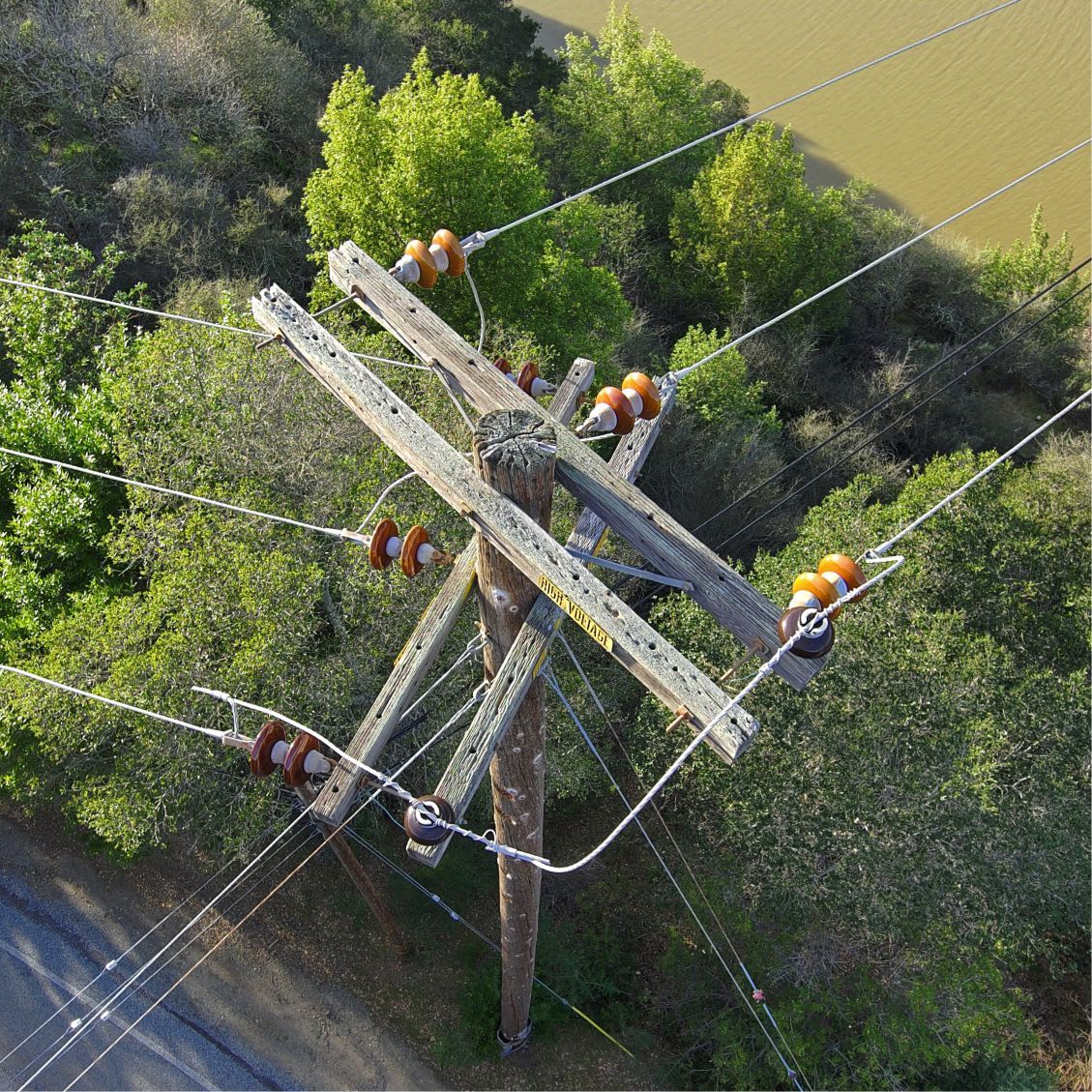
Every pole record begins here. Drone imagery provides the ground truth layer that validates existence, corrects GIS coordinates, and catalogs every visible component before any other data is collected.

✦ Geo-verification β€” True up pole coordinates, correcting legacy GIS errors that can be off by meters
✦ Joint-use attachment inventory β€” Cable sizes, messenger wires, cross arms, transformers, street lights
✦ Down guys & anchors β€” Guy wire angles, anchor types, support structure components cataloged per pole
✦ Visual inspection β€” Woodpeckers, splits, leaning, damaged insulators, corroded hardware captured in imagery
Drone aerial view of utility pole with power lines
POLE LOCATED βœ“ GEO VERIFIED βœ“ ATTACHMENTS LOGGED βœ“
360Β°
Coverage
cm
Resolution
Full
Load Data
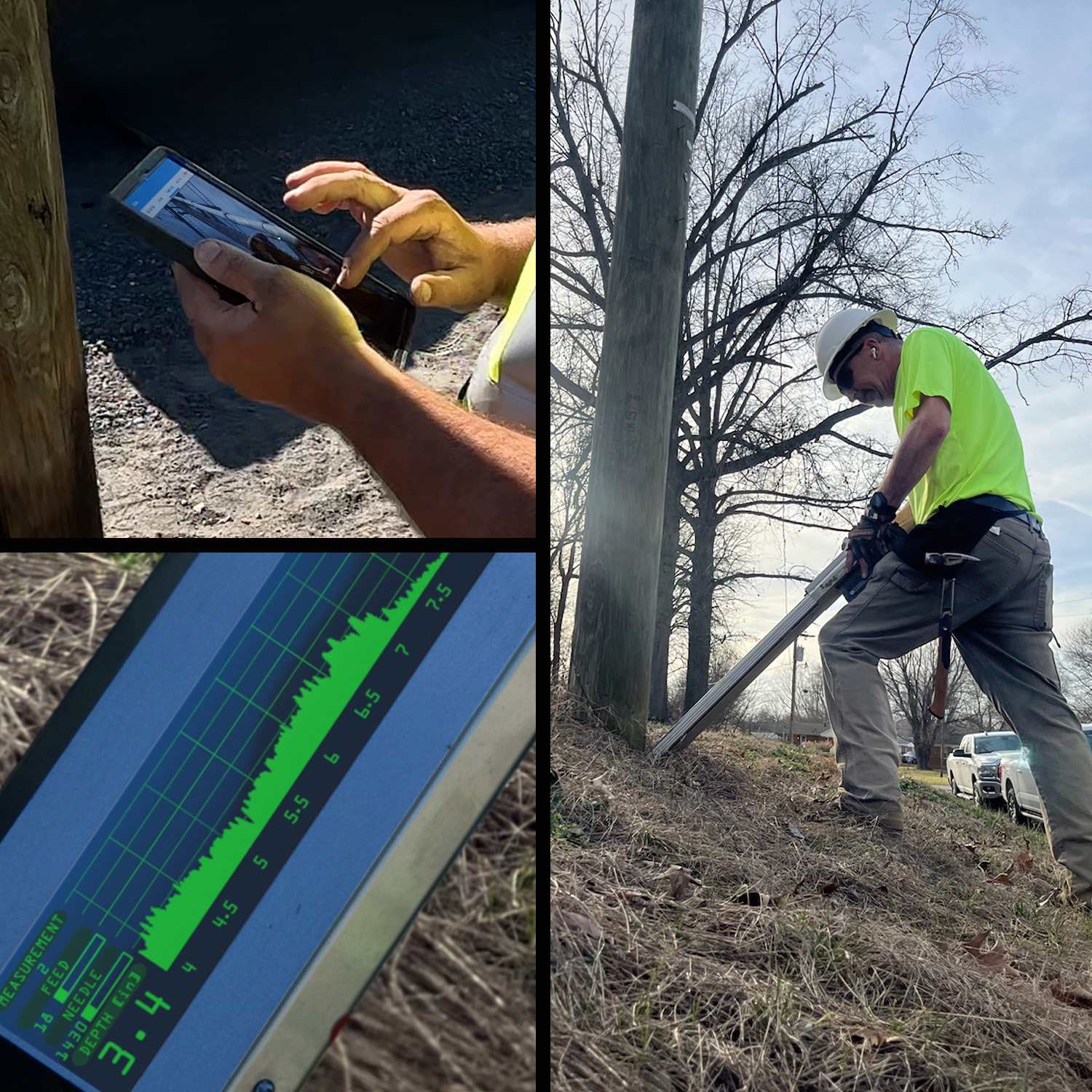
Groundline pole integrity inspection
NON-INVASIVE βœ“ FULL DECAY PROFILE βœ“
Decay
Profile
Moisture
Profile
Health
Score

What Drone Eyes
Can't See

The most critical failure zone for any wood pole is underground β€” where moisture and fungi attack the base. Groundline inspection uses non-invasive technology to generate a complete below-grade health picture.

✦ Full decay profile β€” Percentage of cross-section lost to rot, mapped at multiple depth intervals
✦ Moisture profile β€” Moisture content measurement flags early-stage biological degradation before visible damage
✦ Ground-level photography β€” Anchor confirmations, pole birthmark capture, supplemental images filling drone blind spots
✦ Health indication score β€” Numeric rating feeds directly into the pole's risk matrix as the structural integrity input

Three-Mode Point Cloud
Architecture

LiDAR is deployed in a deliberate hierarchy β€” fastest and broadest first, then gap-filling modes layer in precision where needed. The result: a seamless, complete point cloud ready for measurement and feature extraction.

1
Mobile LiDAR

Vehicle-mounted sensor sweeps entire corridors at highway speeds β€” the fastest way to build a base-layer point cloud across thousands of poles per day.

πŸš—  Highest coverage velocity Β· Best for linear routes
2
Aerial LiDAR

Drone or fixed-wing flyover fills occlusion gaps left by mobile capture β€” vegetation overhang, complex angles, and span geometry that ground-level sensors miss.

🚁  Gap-filling Β· Vegetation penetration Β· Wire geometry
3
Terrestrial LiDAR

Backpack-mounted sensor deployed only where mobile and aerial cannot achieve required density β€” confined corridors, dense urban canyons, complex equipment arrays.

πŸŽ’  Precision fallback Β· Urban canyons Β· Complex geometry
πŸ“‘ Post-collection processing: All three modes are merged, classified (ground / pole / wire / vegetation / hardware), measured, and feature-extracted to produce the geometric inputs required for SPIDAcalc's JSON schema.

From Raw Point Cloud
to Extracted Features

1
Ingest & Merge
Combine mobile, aerial, and terrestrial scans into unified coordinate space
2
Classification
AI + rule-based segmentation: ground / pole / conductor / vegetation / hardware
3
Measurement
Pole height, taper, groundline circumference, attachment heights, wire sag, span length
4
Feature Extraction β†’ JSON
Structured output mapped to SPIDAcalc schema fields β€” ready for upload
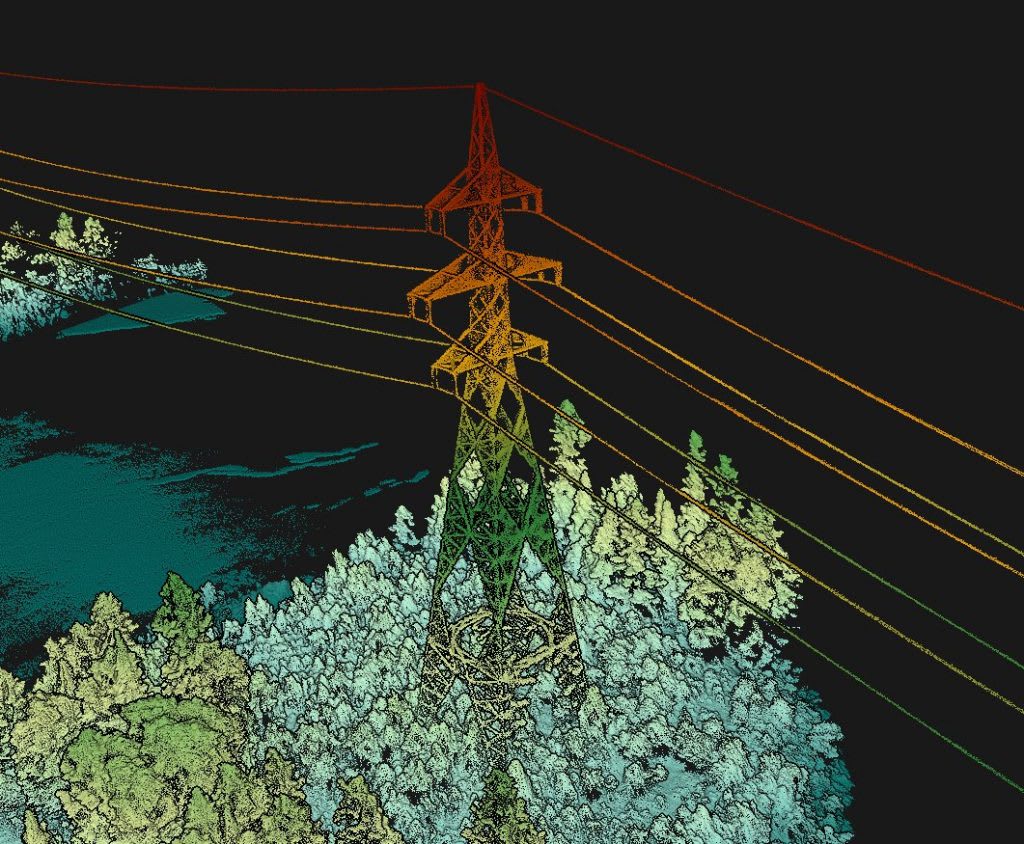
LiDAR point cloud of utility transmission tower
POINT CLOUD VIEW
Extracted: Wire Geometry
Sag, span length, attachment height, catenary profiles
Extracted: Pole Geometry
Height, class, taper, lean angle, groundline circumference
Extracted: Guy Wires
Angle, attachment height, anchor location, wire size
Extracted: Clearances
Ground clearance, vertical separation between attachers

Automated Schema Compilation
for SPIDAcalc

All collected data β€” drone observations, groundline scores, and LiDAR measurements β€” is automatically mapped to SPIDAcalc's open JSON schema. One pole, one JSON object, ready for bulk upload to SPIDAstudio.

Data Sources Feeding JSON
Drone: pole type, owner, attachments, hardware
Groundline: strength reduction, condition code
LiDAR: height, circumference, wire sag, spans
GIS: coordinates, circuit, region, asset owner
β†’
SPIDAcalc JSON Schema
"pole": {
"id": "FTD-0012847",
"species": "Southern Yellow Pine",
"class": "2",
"height": 45,
"glcircumference": 48.2,
"condition": "Average",
"wireEndPoints": [...],
"wires": [{
"owner": "AT&T",
"attachHeight": 28.5
}]
}
⚑ At scale: The automation pipeline generates one valid SPIDAcalc JSON object per pole β€” batch-compiled and validated before upload to SPIDAstudio for parallel cloud processing of thousands of poles simultaneously.

Load Calculations
at Cloud Scale

πŸ“€
Bulk Upload to SPIDAstudio
JSON files uploaded in batches β€” SPIDAstudio's cloud engine analyzes thousands of complex poles in minutes, not days
βš–οΈ
Compliance Standards Applied
GO95 (California) and NESC (nationwide) β€” load cases applied per asset owner jurisdiction
βœ…
Pass / Flag / Remediate
Safety factor results flag poles needing attention; SPIDAcalc desktop supports make-ready modeling for proposed attachments
πŸ—οΈ
Make-Ready Modeling
If current pole cannot support new or existing load, model in a replacement pole β€” full geometric nonlinear analysis with 3D visualization
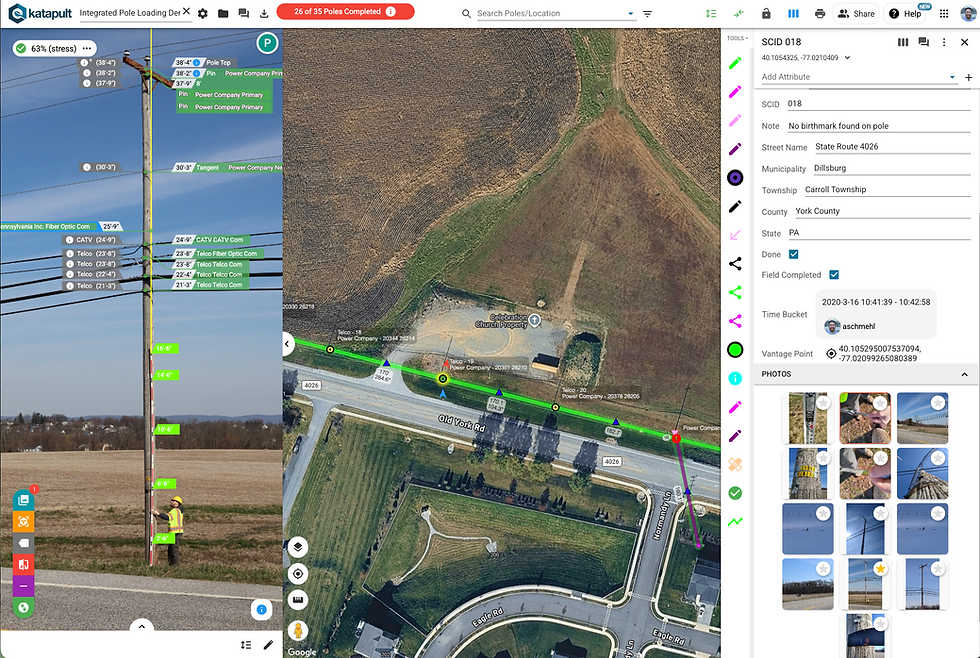
Pole loading analysis software interface
SPIDAstudio
PASS
Safety Factor β‰₯ 1.0
~78% of poles
FLAG
Needs Attention
~22% flagged

The All-in-One Pole Health Index

Every data stream feeds a living risk score β€” updated in real time as conditions change, weather events occur, or new inspections are completed.

Input 1
Visual Inspection
Drone imagery β€” damage, lean, hardware condition, attachment anomalies
Input 2
Integrity Score
Groundline decay %, moisture content, health classification (Good / Average / Poor)
Input 3
Load Compliance
SPIDAcalc safety factor result β€” pass margin, overload %, flagged conditions
Input 4
Vegetation Encroachment
Tree proximity, canopy contact risk, trimming priority scoring from LiDAR + imagery
Input 5
Weather Modeling
Built-in wind / ice / temperature models update pole stress estimates in real time
Input 6
Legacy Data Integration
Asset owner's historical inspections layered in to deepen accuracy and accelerate matrix reliability
πŸ›‘οΈ Output: Every pole receives a composite risk score β€” Green (healthy), Yellow (monitor), Red (remediate immediately) β€” giving asset owners a live view of their entire infrastructure's risk exposure across 950,000+ poles.

Infrastructure Intelligence
That Runs at Scale

The all-in-one platform hosts every data layer for every pole β€” accessible, queryable, and actionable. Not just a data repository β€” a living intelligence system for infrastructure owners.

950K+
Poles Collected
in 18 months of active field ops
5
Data Layers
fused per pole into one record
3
LiDAR Modes
mobile, aerial, terrestrial fusion
Real
Time Updates
weather + inspection sync
🚁 Drone Imagery
+
πŸ”¬ Groundline
+
πŸ“‘ LiDAR
+
βš™οΈ SPIDAcalc
+
πŸ›‘οΈ Risk Matrix
=
Pole Intelligenceβ„’
The Future of Utility
Infrastructure Management

From the first drone flight to a fully automated JSON pipeline feeding SPIDAcalc β€” every pole inspected, measured, scored, and monitored. This is what it looks like when data collection, geospatial intelligence, and compliance automation converge.

950,000+
Poles & Counting
GO95 + NESC
Compliance Ready
Real-Time
Risk Intelligence
FTD Launch β€’ Pole Intelligence Platform